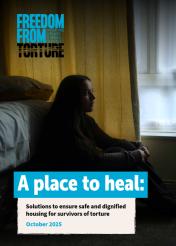


A place to heal: How asylum accommodation re-traumatises torture survivors
How can we ensure safe and dignified housing for survivors of torture? Centering their voices, as well as insights from our clinicians, our new report highlights how asylum accommodation is failing people who have fled war and torture.
No matter who we are or where we come from, we all deserve to live in safety. But every day, in our therapy rooms, we see the impact that unsafe and inappropriate accommodation has on those who have fled unimaginable horrors.
Our clinicians describe how people who’ve endured appalling physical and sexual violence are being forced to share rooms with strangers, live in unsafe and unsanitary conditions and are frequently moved away from specialist healthcare - all of which cause rapid mental health decline.
One survivor described being forced to share a hotel room with a stranger after fleeing torture, saying the constant noise and lack of privacy “felt like being back in the cell again.”
Using findings and voices from the report, we have also published a new guide with the most critical information, up-to-date stats and powerful stories of asylum accommodation.
Our new research also includes powerful case studies illustrating the real human impact of unsafe housing. Miriame, a survivor of torture from the Democratic Republic of Congo, was forced to share a hostel dormitory with five others while pregnant and alone. Constant moves between London, Dover and Margate left her feeling “like a prisoner,” unable to rest or access consistent care.
Mwa Mbuyi Kapinga, also a survivor from the DRC, spent seven and a half years in asylum accommodation, often sharing overcrowded, unsafe housing. “You are a number. You are a statistic,” she said. “Someone coming from torture…I was struggling so much. I couldn’t sleep. I was having flashbacks, headaches. You are on edge all the time.”
These testimonies show how unstable, unsafe housing can undo years of recovery for people rebuilding their lives after torture.
Sile Reynolds, Head of Asylum Advocacy at Freedom from Torture and author of the report, said:
“Every day in our therapy rooms, we see first-hand the devastating impact unsafe and unsuitable asylum housing has on survivors of torture. These are men, women and children who are trying to recovery after unimaginable cruelty. They need stability, privacy and safety – not another source of fear. Better quality and faster asylum decisions would allow the Government to empty the hotels, while locally-tailored and resourced housing models would mean that refugees could rebuild their lives in thriving communities.”
‘A Place to Heal’ combines survivor testimony with clinical evidence and practical policy solutions at a pivotal time, as the Government pledges to end the use of hotels for asylum accommodation.